
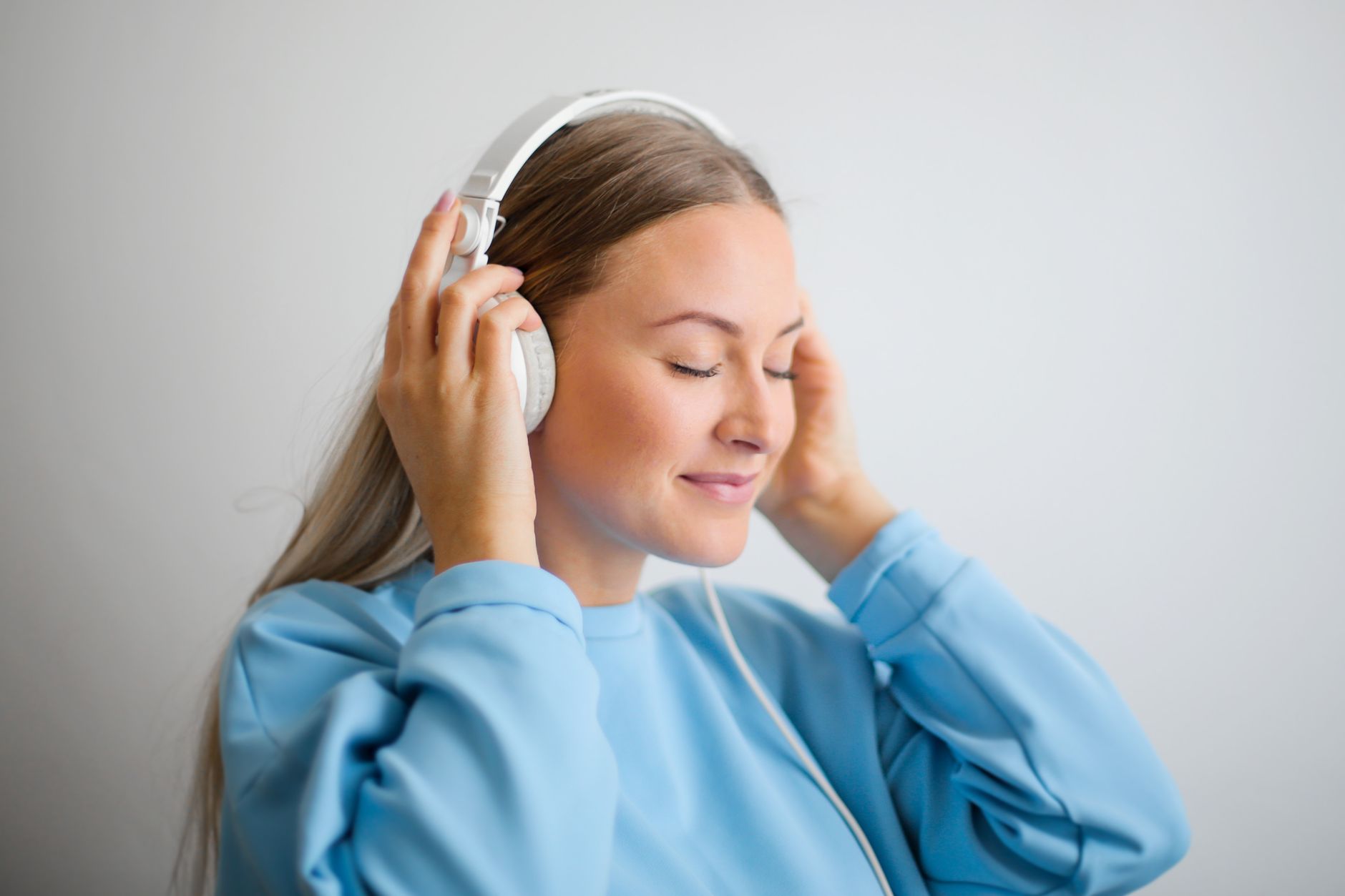
Someone downloaded a brainwave audio track — theta for focus, gamma for money, whatever the ritual promised — pressed play a couple of times, and only then typed “are binaural beats safe” into a search bar at eleven at night. A version of that question shows up in my inbox every few weeks.
That’s the right question. It’s just usually asked in the wrong order.
I’ve reviewed a stack of these wealth and mindset audio programs here, and I don’t feel right pointing anyone toward one without answering this properly first — not the marketing-page version, the research version.
Here’s the honest shape of it.
What a binaural beat actually is
Play a slightly different tone in each ear — 200 Hz in the left, 210 Hz in the right — and your brain doesn’t hear two tones. It perceives a third, phantom pulse at the difference between them: 10 Hz, here. The theory behind every one of these audio programs is that your brainwave activity can be nudged toward that pulse’s frequency — calmer, more focused, more receptive.
It’s a real, measurable acoustic effect. What it does once it reaches your brain is the part still being argued over.
What the research shows, and doesn’t
Mixed is the honest word. Some studies find a real dip in reported anxiety or a small bump in focus. Others find no effect, or even a slight cognitive cost during the listening session itself. A 2021 Global Drug Survey of more than 30,000 people found plenty of binaural-beat use for relaxation and sleep — and researchers involved were candid that the evidence base hasn’t caught up to the marketing. One put it plainly: mounting, but still unclear.
That’s not the same as “debunked.” It’s “under-studied,” which is a less satisfying answer but a truer one.
The side effects that actually show up
For most people, the real-world risk profile is low — closer to background music than supplement. A few things are worth knowing before your first session, not after.
Irritability or a jangly, overstimulated feeling can turn up during or right after a session, especially with longer tracks or higher frequencies. Volume is a separate issue from the beat itself — cranking it up to feel it more carries the same tinnitus and hearing-strain risk as any loud, prolonged audio. Using an energizing track close to bedtime can backfire on sleep, a little ironic given how often these are sold as sleep aids. And a smaller number of people lean on the audio so consistently that falling asleep without it starts to feel harder — a dependency loop worth noticing early.
Who should actually talk to a doctor first
One group deserves a direct answer, not a vague disclaimer: people with epilepsy. Sound-triggered seizures are a documented, real phenomenon called musicogenic epilepsy — but a rare one. The medical literature has tracked roughly 126 cases total, clustered in people with a specific profile, often high musicality and right temporal lobe epilepsy. A small slice of an already small, sound-sensitive population.
Rare isn’t the same as zero.
If seizures are anywhere in your history, this is a check-with-your-neurologist-first category, not a just-try-it-and-see one. Everyone else is working with a genuinely low-risk, still-being-researched tool — not a medical device, and not nothing either.
What I actually do with mine
Low volume, always — quiet enough that I could still hear my own kitchen if something needed my attention. Never the only thing standing between me and sleep, because I don’t want to find out what happens the one night I forget my earbuds. And I don’t treat twelve minutes of audio as a replacement for what a hard week actually needs — a therapist, a doctor, real rest — instead of a workaround for it.
It’s one small input into an ordinary Tuesday. That’s all I ever expect it to be.
If you want the plain-English version of what these audio programs actually claim, and where the neuroscience stops, I broke that down here.
If you want more of this — the honest, no-hype version of the claims everyone’s making — that’s most of what lands in my newsletter first.
Leave a Reply