
Last week a reader emailed asking what “7 Hz” was actually supposed to do to her, because the app she’d downloaded wouldn’t say — just a frequency number, a still image of a sunset, and a play button. I didn’t have a clean answer on the spot. So I spent an evening at my kitchen table with three tabs of research open, which is a less glamorous origin story than most of these products imply.
Here’s the plain version of what these labels mean, and where the science actually stops.
What the words mean before anyone tries to sell you anything
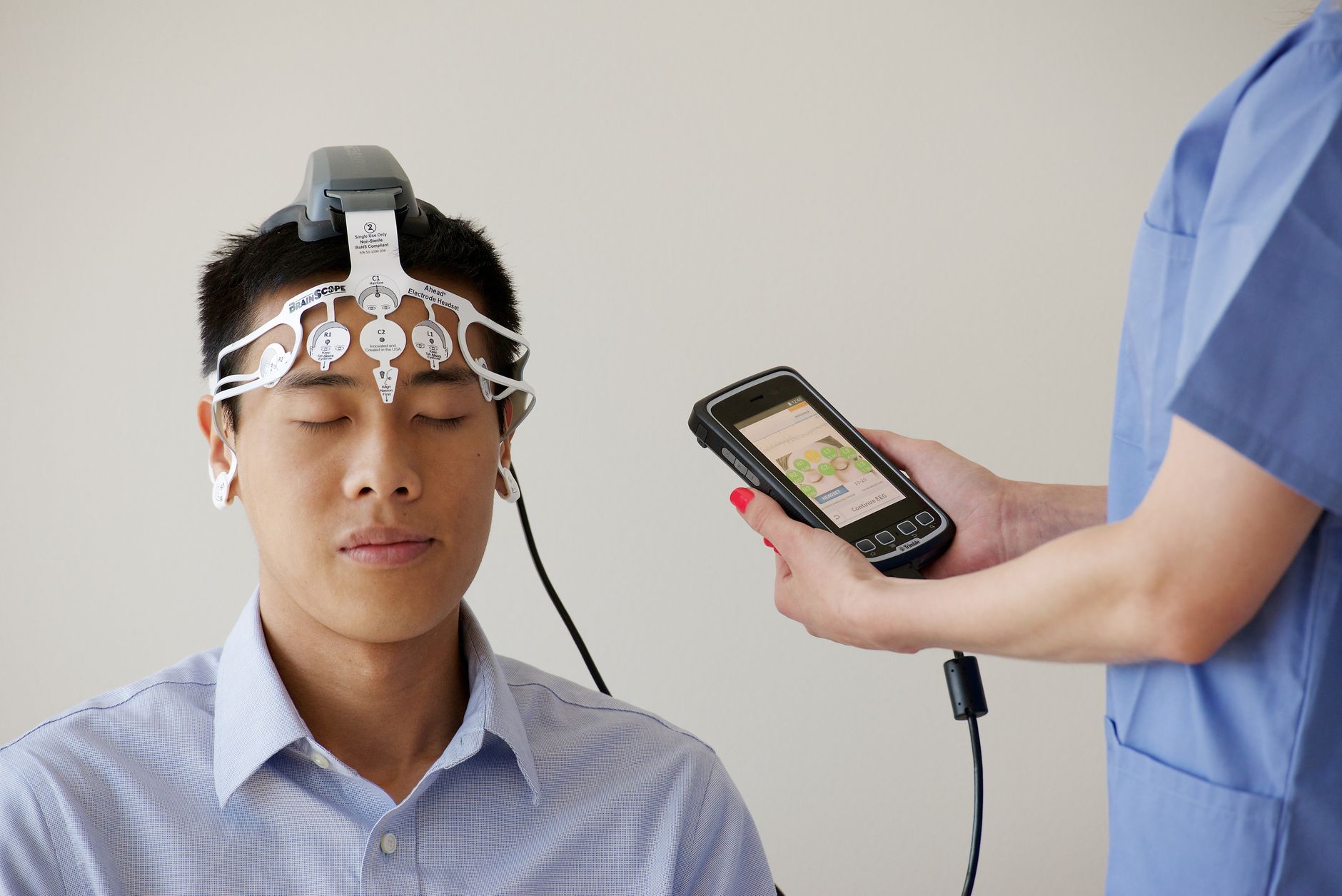
Your brain runs on electrical activity that oscillates at different speeds, measured in cycles per second, or Hz. Neuroscientists grouped these speeds into bands decades before wellness marketing got hold of them. Roughly: delta is deep dreamless sleep, theta (about 4–8 Hz) shows up in light sleep, deep meditation, and that drifting state right before you fall asleep. Alpha (8–12 Hz) is relaxed, calm wakefulness — the state you’re in staring out a train window. Gamma (30–100 Hz, often marketed at 40 Hz specifically) is associated with focused attention and the brain binding separate pieces of information into one perception.
None of that is invented. It’s real, decades-old EEG research. That part I’d stake my name on.
The leap these audio programs make is different: they claim that if they play you a tone engineered at, say, 7 Hz, your brain will fall into step with it — a process called entrainment — and you’ll get the theta state on demand, piped in through your earbuds while you fold laundry.
What’s actually been tested
This is the part worth slowing down for, because it’s genuinely mixed — not a clean yes, not a clean no.
A 2023 systematic review in PLOS ONE looked at fourteen published studies on binaural beats and brain entrainment. Five found results consistent with the entrainment idea. Eight found results that contradicted it. One was mixed. The researchers’ own conclusion was that the question "cannot be settled at this point," given how differently each study was designed. That’s not a hidden footnote — it’s the headline finding from people whose job is reading this research fairly.
Separately, an earlier meta-analysis pooling many of these same studies found a real but modest effect — a moderate effect size across things like memory, attention, anxiety, and pain perception. Not nothing. Also not a brain rewrite.
A more recent 2025 study found that entrainment effects depend heavily on the specific tone used, background noise, and how long you listen — meaning the frequency number alone doesn’t determine whether anything happens.
So: the phenomenon is real enough that serious researchers keep studying it. It is not reliable enough that anyone honest can promise you a specific mental state on a specific timeline.
Where the marketing outruns the microphone
Here’s the sleight of hand I want to name directly, because it’s the part that actually matters if you’re deciding whether to spend money.
Everything above is about attention, relaxation, sleep onset, and memory. Nothing in that research is about money.
A wealth-frequency audio program borrows the real, if modest, neuroscience of brainwave states, and then quietly attaches a second, unrelated claim on top — that a calmer, more focused brain state will somehow attract or generate income. That second claim isn’t in any of the studies above. It’s not a scientific extension of them. It’s a separate belief, layered on afterward, and it deserves to be evaluated as its own thing rather than borrowing the credibility of the Hz research it sits next to.
I don’t think that makes every person who makes or buys these products a con artist. I think it makes the claim on the label bigger than the evidence underneath it, which is a distinction worth holding onto with a clear head.
So is any of it worth doing
Probably, for reasons that are less mystical than advertised. Ten to twenty quiet minutes with headphones on, in a room you’ve deliberately stepped into to sit still, tends to lower your heart rate and quiet your thinking whether or not the specific Hz number is doing the heavy lifting. Expectation and ritual are doing real work here too — that’s not a knock, it’s just honest about the mechanism.
If you already have one of these audios and it helps you exhale, that’s a legitimate outcome. Just hold it loosely as a calming habit, not a financial strategy with a frequency dial.
If you want the deeper dive specifically on the 40 Hz gamma claim — the one tied to that MIT-adjacent focus research everyone’s been sharing — I broke that one down on its own, study by study, here.
If you want more of this — the plain-English version of the claims everyone’s making, minus the sunset stock photos — that’s most of what lands in my newsletter.
Leave a Reply