
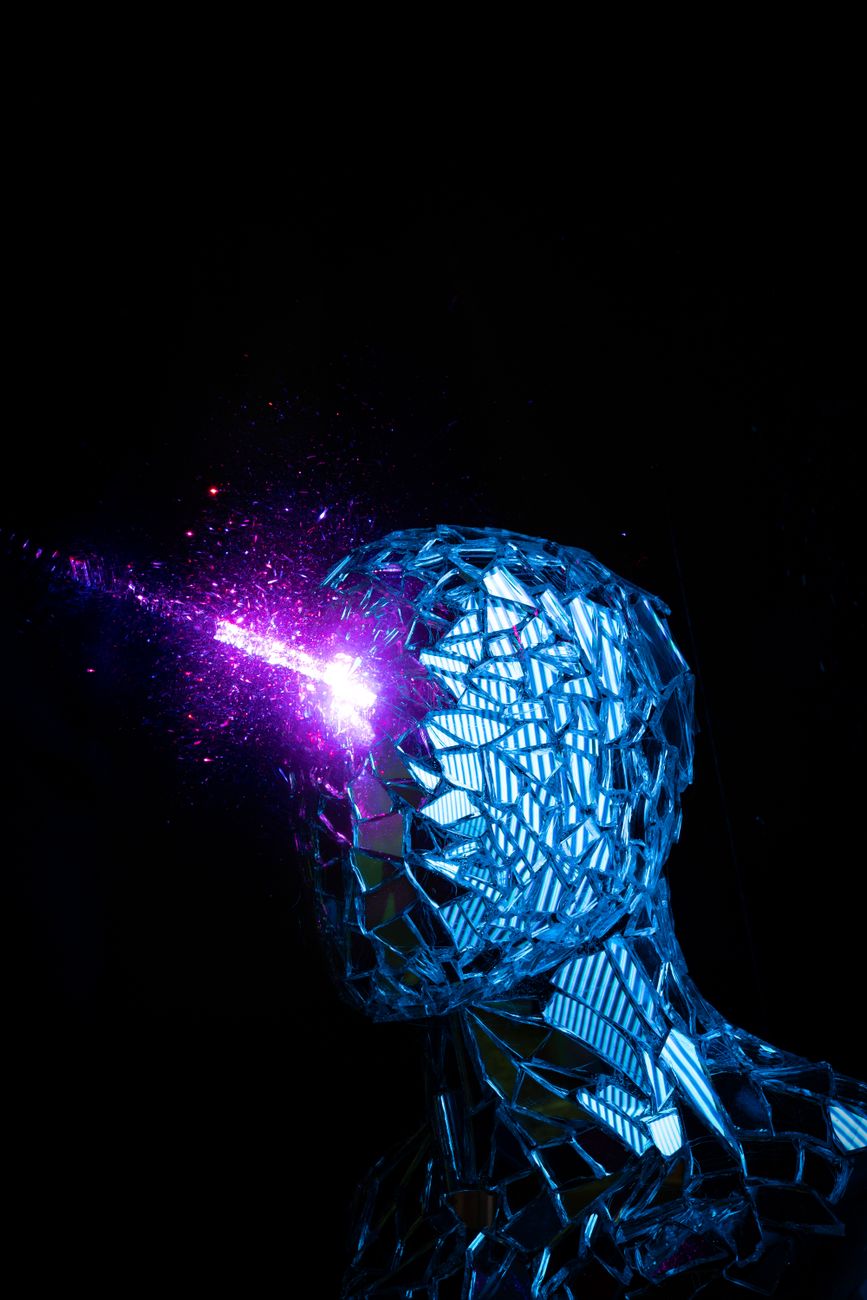
The headline crossed my phone while I was standing at the sink, half-listening to a podcast, hands full of a pan I was pretending to scrub. MIT finds the volume knob for consciousness. I set the pan down.
By the time I’d dried my hands, three separate manifestation accounts had already reposted it with some version of the same caption: science finally proves you can turn up your consciousness and manifest faster. One had a countdown emoji next to it, which should tell you something.
I went and read the actual paper instead of the caption.
What’s real: MIT researchers published a roadmap in February, outlining how a technology called transcranial focused ultrasound could be used to study consciousness. Not a supplement, not a soundtrack, not anything you can buy. A precise, noninvasive way to stimulate small, deep regions of the brain that scientists previously couldn’t reach without surgery.
Right now, most consciousness research can only watch and correlate. Brain lights up, person reports seeing something. Useful, but it doesn’t prove the lighting up caused the seeing. This tool would let researchers nudge a specific circuit and watch what changes, which is the difference between noticing two things happen together and actually testing whether one causes the other.
That’s the whole finding.
No one has manifested anything with it. No one has even run the experiments yet — the paper is a proposal for research that’s just getting started, mapping out questions like where pain actually originates in the brain, or whether awareness needs the frontal cortex at all. The researchers themselves call it, plainly, a new tool. Not a discovery about what consciousness is for, or what you can do with more of it.
It’s a better microscope, not a bigger volume knob.
I want to be honest about why this matters to me beyond just correcting a caption. A real, careful piece of science just got dressed up in a manifestation costume it never agreed to wear, and it’ll probably keep circulating that way for months, further from the source every time it’s shared. That happens constantly in this space — the 40Hz focus study is the clearest example I’ve written up — and I don’t think it’s always cynical. Mostly it’s people who want the world to be a little more magical than a roadmap paper about ultrasound methodology, which, fair. I want that too, most days.
But wanting it doesn’t make the paper say it.
Here’s what I actually find interesting about it, once you strip the caption away: serious researchers are treating subjective experience — the felt, private sense of being aware — as something worth building new instruments for. That’s not nothing. Consciousness has spent a long time being the question science mostly shrugged at, too slippery to test directly. A tool built specifically to poke at cause and effect there is a real shift, even if it takes years to produce anything you or I would recognize as an answer.
I’d rather sit with that slower, truer version than the one with the countdown emoji.
If there’s a practice in this at all, it’s a small one: before you let a headline rearrange what you believe about your own mind, find the actual paper, or at least the actual researchers’ own words about it. It takes about the same amount of time as reading the caption twice. Nine times out of ten, the real version is smaller and stranger than the one built for sharing — and, I’d argue, more worth your attention for exactly that reason.
I’ll flag it if the actual experiments turn up anything worth knowing. Until then, I keep the more careful, slightly skeptical version of whatever’s circulating in my newsletter before it turns into a post here. If that’s useful to you, it’s a quiet corner of your inbox worth joining.
With Love, Wren
Leave a Reply